In Defense of Staring at the Wall: How Doing Nothing Saves Your Creative Life
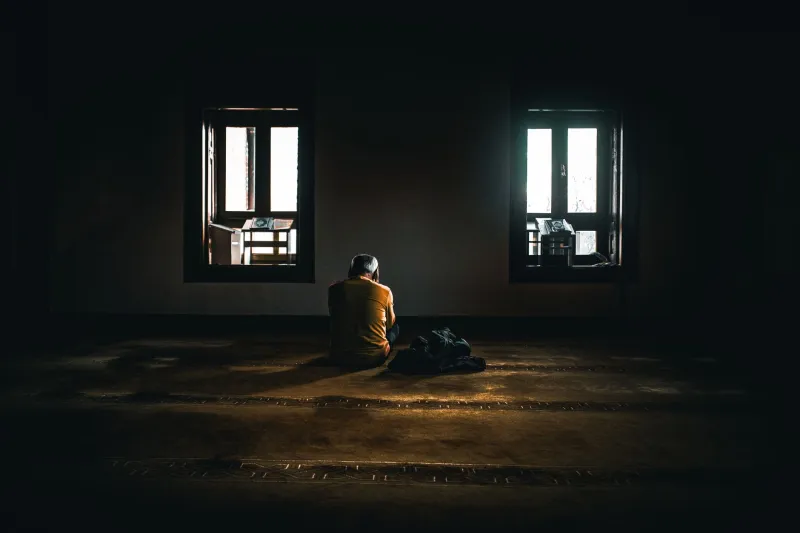
I want to make a case for boredom. Not the anxious, scrolling kind — the real thing. The kind where you're sitting somewhere without a phone in your hand, not particularly thinking about anything, and your brain starts doing that weird, wandering thing it used to do before we gave it a constant IV drip of stimulation. That kind of boredom is almost extinct now. And I think it's quietly killing our creative work.
This isn't a nostalgia piece. I'm not here to tell you things were better before the internet or that you should throw your phone into the Hudson River (though, some days). This is about something more specific: the way the always-on creative economy has made genuine mental fallow time feel not just unproductive, but wrong — and what we lose when we let that feeling run the show.
What We Actually Lost
Boredom, the real neurological kind, is when your brain shifts into what researchers call the default mode network. It's the mental state associated with daydreaming, wandering thought, and — crucially — the kind of non-linear, associative thinking that tends to produce creative insight. It's not nothing. It's actually a highly active brain state, just not one that's pointed at a task.
The problem is that we've made this state nearly inaccessible. The average American checks their phone around 96 times a day. Every gap — the line at the coffee shop, the elevator, the two minutes before a meeting starts — gets immediately filled. We've essentially declared war on the idle mind, and the creative class has arguably felt the consequences hardest.
Think about the last time you had a genuinely unexpected idea. Not a solution you worked toward deliberately, but something that arrived sideways, from nowhere, while you were in the shower or on a long drive. That's the default mode network doing its thing. Now think about how rarely you're actually in a situation where that can happen.
The Artists Who Figured This Out
This isn't a new insight, but it keeps getting buried under the next productivity framework. History is full of creatives who built deliberate idleness into their practice — and whose most significant work emerged from it.
Maya Angelou famously rented a hotel room to write in, but she also built long, unstructured mornings into her routine — time before the writing started, time that wasn't about output. Haruki Murakami runs for hours every day, not to think about his novels, but specifically not to. He's described the physical repetition as a way of emptying his mind so something else can move in. Jack Kerouac, whatever you think of him, spent long stretches doing essentially nothing before On the Road came out of him in a famous three-week burst.
More recently, musician Bon Iver's Justin Vernon retreated to a Wisconsin cabin for a winter of isolation and near-total inactivity before recording For Emma, Forever Ago — the album that launched his career. He wasn't working. He was hunting, watching snow fall, and letting his brain decompress from a rough few years. The music came out of the stillness, not in spite of it.
The pattern holds across disciplines. The fallow period isn't a gap in the creative process. It is the creative process.
Why the Hustle Narrative Gets This So Wrong
The problem with hustle culture — and I say this as someone who has definitely fallen for it — is that it conflates visible output with actual creative health. Post more, make more, ship more, always be building. The logic sounds reasonable until you realize you're running on fumes and everything you're making feels slightly hollow.
Creative work isn't manufacturing. You can't just add more hours and get proportionally more output. The relationship between effort and result is genuinely nonlinear. Some of your best ideas will arrive on a Tuesday afternoon when you're doing absolutely nothing of consequence. None of them will arrive when you're grinding at 1am out of guilt.
The hustle narrative also conflates rest with laziness, which is its most damaging lie. Rest — genuine, unstructured, unstimulated rest — is not the absence of work. It's a necessary phase of it. Farmers understood this. You don't plant the same field twelve months a year and expect it to keep producing. You let it rest. You let it recover. The soil needs that time to become fertile again.
Your mind works the same way.
How to Actually Get Bored Again
This is harder than it sounds, which is a little embarrassing but also very real. If you've been operating in always-on mode for a while, genuine idleness can feel genuinely uncomfortable. Your brain will resist it. You'll reach for your phone before you even realize you've done it.
A few things that help:
Start small and analog. Take a walk without headphones. Eat lunch without looking at anything. Sit on your stoop for fifteen minutes with no agenda. You're not meditating — you're just not doing anything. Let it be awkward.
Schedule unscheduled time. This sounds contradictory, but it works. Block time in your calendar that has no deliverable attached to it. Protect it the way you'd protect a client meeting. Do not fill it.
Resist the urge to document. The second you start treating your idle time as potential content, it stops being idle. Some experiences should stay private. Some thoughts should stay unposted. Let your boredom be yours.
Take longer breaks than feel comfortable. A weekend away from the work is nice. Two weeks starts to get interesting. The anxiety peaks around day three and then something shifts. Most creatives who've taken extended breaks report the same thing: the ideas that come after the fallow period are different in kind, not just quantity.
The Permission You Didn't Know You Needed
Here's what I want you to take from this: doing nothing is not falling behind. It is not laziness dressed up in philosophy. It is a legitimate, evidence-backed, historically validated part of making things that matter.
The work you're most proud of — the stuff that surprised even you when it came out — almost certainly didn't come from your most productive sprint. It came from somewhere quieter. Your job is to protect access to that place, even when the algorithm and the group chat and the content calendar are all screaming at you to fill every second.
Stare at the wall. Let your mind wander. Get bored.
Your best work is waiting on the other side of it.