The Mirror Problem: When Building Your Brand Starts to Feel Like Lying
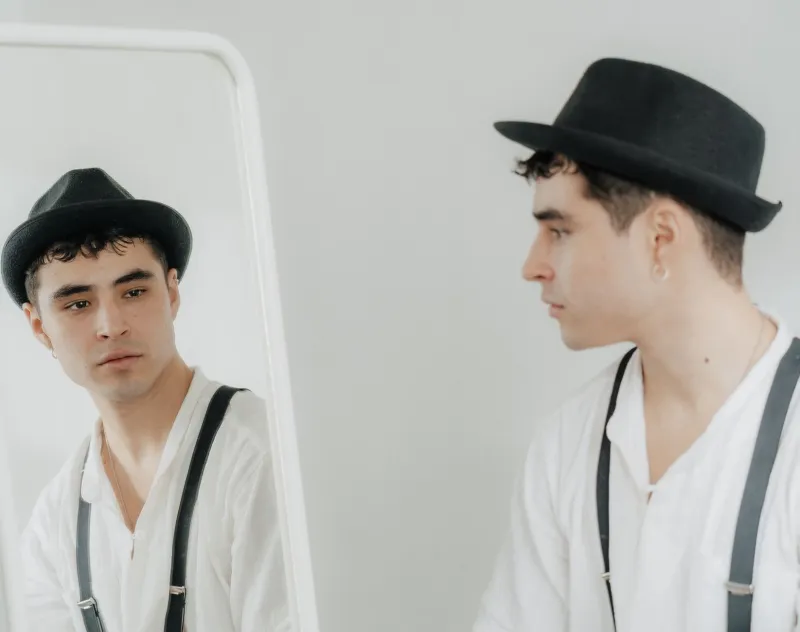
The Moment You Feel Like a Fraud
It usually sneaks up on you. You're crafting a caption, recording a behind-the-scenes clip, or writing your bio for the fourth time in two years — and something just feels off. Not wrong exactly, but hollow. Like you're describing someone you used to know, or maybe someone you only kind of aspire to be.
This is the authenticity paradox, and if you're a creative who's been told to "build your brand," you've almost certainly lived it. The advice sounds so clean and reasonable: be yourself, show your process, let people in. But somewhere between the first mood board and the fifteenth strategic post, "being yourself" starts to feel like a job description. And not a fun one.
The uncomfortable truth? The more intentional you get about self-presentation, the more artificial it can feel — even when you're being completely honest.
Why Curation Isn't the Enemy
Let's get one thing straight before we spiral into a full authenticity crisis: curation is not the same as deception. Every artist edits. Every filmmaker selects takes. Every writer revises. The act of choosing what to share and what to leave out isn't inherently dishonest — it's craft.
The problem isn't that you're curating. It's what you're curating toward.
When you start building your public-facing identity around what performs well rather than what's actually true for you, that's when the drift begins. You post the studio shot instead of the messy desk. You talk about the finished piece instead of the three weeks you hated it. You emphasize the wins because the algorithm rewards confidence and the internet is merciless to doubt.
And slowly, quietly, you start to lose the thread back to yourself.
The Monetization Pressure Makes It Worse
Here's where things get genuinely complicated for working creatives. Once your identity becomes a revenue source — through brand deals, speaking gigs, Patreon, or just the social capital that translates into opportunities — the stakes of self-presentation change completely.
Now it's not just about feeling authentic. It's about whether your authentic self is marketable. Whether your real opinions will cost you a partnership. Whether your actual aesthetic is niche enough to be distinctive but broad enough to pay rent.
This is where a lot of creatives hit a wall. The version of themselves that built an audience might not be the version of themselves they want to be in five years. But pivoting feels like a betrayal — of the audience, of the brand, of the income stream.
So they keep performing. And performing. Until one day they look back at their own archive and don't recognize the person in it.
The Real Cost of Playing a Character
Burnout in creative industries is rarely just about workload. It's often about the exhaustion of sustained performance — of maintaining a persona that requires effort to inhabit. When your brand is a character rather than an honest expression, every piece of content becomes a small act of self-erasure.
Psychologists call this "self-concept discrepancy" — the gap between who you actually are and who you're presenting yourself to be. And research consistently shows that the wider that gap, the higher the psychological cost. Anxiety, disconnection, creative blocks. The stuff that makes you want to delete everything and move to a cabin in Vermont.
The irony is that audiences can often feel this gap, even when they can't name it. Engagement starts to feel transactional. Comments get shallower. The community you built starts to feel like an audience rather than a connection.
Strategies That Actually Help
So what do you do with all of this? A few things that actually work, from creatives who've navigated this without losing themselves in the process.
Anchor to values, not aesthetics. Your visual identity will evolve. Your opinions will shift. But if your brand is rooted in what you actually care about — the questions you keep returning to, the work that makes you feel most alive — it can flex without breaking. Ask yourself: what would I still be making if no one was watching?
Build in permission to change. One of the most liberating things you can do is explicitly acknowledge, to yourself and your audience, that you're a work in progress. This isn't vulnerability theater — it's just honest. People who've followed someone through genuine evolution are far more invested than people who signed up for a fixed product.
Separate the brand from the business. Your personal brand doesn't have to carry every dollar you make. Licensing your work, creating products, collaborating on projects — these can generate income without requiring you to perform your identity 24/7. The less your survival depends on constant self-presentation, the more freely you can actually be yourself.
Get honest about the gap. Periodically audit your public-facing content against your private reality. Not to perform more vulnerability online, but to notice where the drift has happened. Sometimes just naming it to yourself — "I've been presenting X but actually feeling Y" — is enough to recalibrate.
The Brand That Lasts
The creatives who build something durable aren't the ones who figured out the perfect persona. They're the ones who stayed curious enough about themselves to keep updating their self-understanding — and honest enough to let that show.
Your brand doesn't need to be a finished product. It can be a living document of who you're becoming. That's not a weakness in your positioning. For a lot of people watching, it's the most compelling thing you've got.
The goal isn't to stop curating. It's to curate toward yourself, not away from it.