No Map, No Problem: How Getting Lost Actually Builds Your Creative Identity
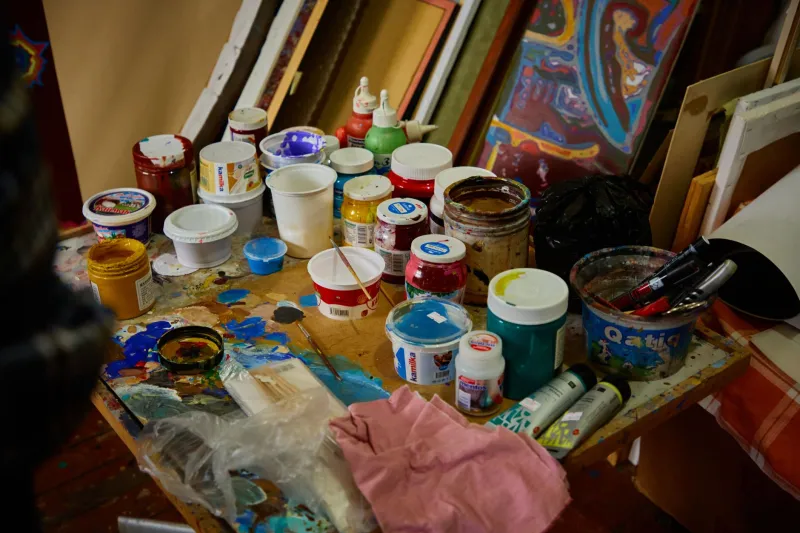
Somewhere between your third mood board and your seventh revision of a personal mission statement, something quietly dies. It's not your ambition — that's still there, anxious and humming. What dies is the weird, unruly, slightly embarrassing impulse that made you want to make things in the first place.
We've been sold this idea that creative identity is something you architect. That before you pick up a camera, a brush, a microphone, or a keyboard, you need to know exactly who you are, what you stand for, and which three adjectives describe your brand. Strategy first, art second. It sounds responsible. It also sounds like a really efficient way to sand off every interesting edge you have.
Here's what nobody in the branding space wants to admit: most of the creative voices we actually find unforgettable weren't planned. They were discovered. And the discovery happened through mess.
The Accidental Signatures
Think about the artists and makers whose work you'd recognize anywhere — not because they told you what to think about them, but because something in the work just feels like them. That quality didn't come from a positioning document. It came from years of making things they were genuinely curious about, regardless of whether those things fit together.
Jean-Michel Basquiat wasn't running a content calendar. He was painting on walls and doors and whatever surfaces he could find, pulling from street culture, jazz history, anatomy textbooks, and personal obsession all at once. The signature emerged from the obsession, not the other way around.
David Lynch made Eraserhead as a six-year fever dream with almost no budget and zero commercial intent. The visual language that became distinctly, unmistakably Lynch — the industrial dread, the dream logic, the red curtains — none of that was strategized. It was excavated.
You could run that same exercise with musicians, writers, photographers, designers. The pattern holds. The most recognizable voices tend to be the ones that formed in the dark, without an audience in mind.
What Strategy Actually Does (And Doesn't Do)
Look, strategy isn't the enemy. Knowing your audience, understanding how to communicate clearly, thinking about where and how you share your work — all of that matters. But there's a difference between strategy as a tool you pick up after you've made something real, and strategy as a cage you build before you've figured out what you actually care about.
When you lead with strategy, you end up optimizing for legibility. You make work that's easy to categorize, easy to pitch, easy to fit into an existing market slot. And legible work is fine. It performs. It gets the clicks. But it rarely surprises anyone, including yourself.
The problem with knowing your brand too early is that it gives you permission to stop being curious. You already know what you make, so you stop asking what else you could make. You stop following the strange thread just to see where it goes. You stop making the thing that has no obvious audience because it doesn't fit the lane you've already chosen.
Curiosity, on the other hand, is generative in a way that strategy simply isn't. It pulls you toward things before you understand why. And it's in that space — the why haven't I figured this out yet space — where your actual voice tends to show up.
Intentional Aimlessness Is Still Intentional
This isn't a case for being sloppy or passive. There's a difference between drifting and exploring. What I'm talking about is making a conscious decision to follow genuine interest rather than market logic — to let the work lead instead of making the work serve a predetermined conclusion.
That takes discipline, actually. It's easier to have a plan. Plans give you something to point to when someone asks what you're doing. "I'm building a brand around sustainable fashion illustration" is a sentence that makes sense at dinner parties. "I've been making weird collages at 2am because something about it feels important" is harder to explain, but it's probably closer to where the real work lives.
Intentional aimlessness means you show up consistently, you make things seriously, you engage with your craft with full attention — you just refuse to decide in advance what the output is supposed to mean or look like. You stay in the question longer than feels comfortable.
The Pattern Reveals Itself
Here's the thing about creative identity: it's not something you build. It's something you find, retrospectively, by looking back at a body of work and noticing what keeps showing up.
Maybe you're three years into making stuff and you suddenly realize that every project you've touched — regardless of medium or format — has this particular relationship with stillness. Or with humor. Or with the color palette of late afternoons. You didn't plan that. It just kept appearing because it's genuinely yours.
That's your voice. And it's more durable than anything a brand strategy session could hand you, because it didn't come from a framework — it came from you, repeatedly, across time.
The work of developing a creative identity is really the work of making enough things that the pattern becomes visible. You can't rush that by deciding who you are before you've had the chance to find out.
Let the Work Do the Work
If you're early in your creative life — or if you're mid-career and feeling like your work has gotten a little too tidy, a little too on-brand — consider giving yourself permission to make something with no clear purpose. Something you're curious about rather than something that fits the image you've been carefully maintaining.
Make the thing that doesn't make sense yet. Follow the weird reference. Start the project you can't explain. Let yourself be confused by your own impulses for a little while.
The strategy can come later. The voice has to come first. And it'll only show up if you give it enough room to surprise you.
Your most recognizable creative signature is probably already in there somewhere — hiding inside the work you haven't let yourself make yet because it doesn't fit the plan. Ditch the plan. Make the work. See what keeps coming back.
That's your answer.