Stop Filling the Silence: How Getting Genuinely Bored Might Be the Most Radical Thing You Do for Your Art
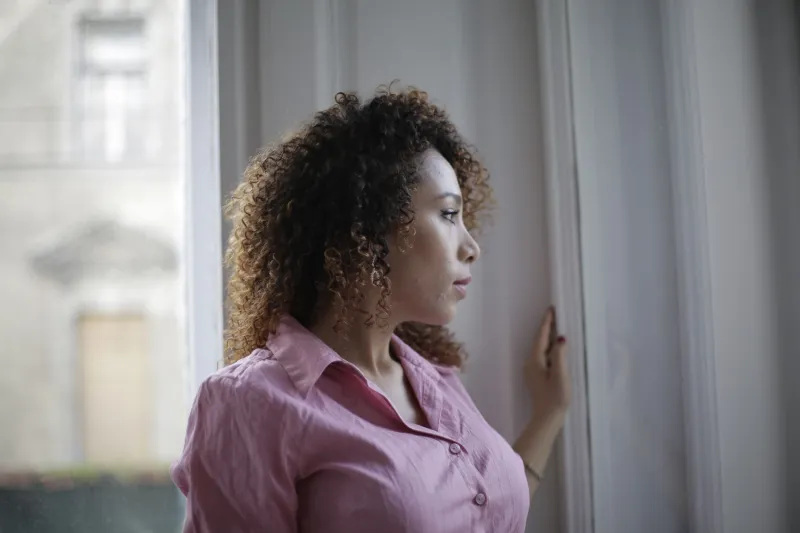
I want to tell you about a Sunday afternoon I spent doing almost nothing.
No podcast. No scrolling. No "productive" ambient playlist. Just me, a slightly too-warm apartment, and the specific low-grade restlessness that Americans have been trained to treat like a medical emergency. I watched a water stain on my ceiling for a while. I thought about something a friend said three weeks ago. I stared out the window at a guy walking a very small dog with enormous ears.
And then, about forty-five minutes in, something cracked open. An idea I'd been circling for months suddenly had a shape. Not a vague notion — an actual, clear, specific thing I wanted to make. It arrived fully formed in a way that no amount of brainstorming sessions or mood board building had managed to produce.
Boredom did that. Real boredom. The kind we've been running from.
The War on Empty Time
American productivity culture has a complicated relationship with stillness, and it's gotten worse. We've built an entire ecosystem designed to colonize every unscheduled moment — podcasts for your commute, reels for your lunch break, newsletters for your Sunday morning, ambient content for your ambient time. The message underneath all of it is consistent and relentless: idle time is wasted time, and wasted time is a character flaw.
For artists and creatives, this pressure layers on an extra anxiety. We're supposed to be grinding. Posting. Creating content about creating content. Building our audience while building our craft while building our brand. The grind is the identity. Rest gets repackaged as "active recovery" and productivity hacks get rebranded as self-care, but it's still the same engine running.
What gets lost in all of that noise is something neuroscience has been trying to tell us for years: your brain does some of its most important work when you think it's doing nothing at all.
What's Actually Happening When You Zone Out
Researchers call it the default mode network — a set of brain regions that activate specifically when you're not focused on a task. For a long time, scientists thought this was just mental static, the brain idling between jobs. Then they started looking closer.
It turns out the default mode network is where your brain integrates experience. It's where disparate memories and ideas get stitched together into novel connections. It's where you process emotion, imagine future scenarios, and — critically for anyone who makes things for a living — where genuine creative insight tends to originate.
Here's the catch: the default mode network only fires up when external stimulation drops below a certain threshold. Which means every time you reach for your phone to fill a quiet moment, you're essentially interrupting a creative meeting your brain was trying to have with itself.
The ideas that feel like they "came out of nowhere" while you were in the shower, or driving a familiar route, or doing dishes? That's the default mode network doing its thing. You weren't doing nothing — you just weren't doing anything deliberate, which is exactly the condition your brain needed.
Boredom Is Different From Rest
This is worth distinguishing, because they're not the same thing. Rest — sleep, intentional relaxation, a proper vacation — is about recovery. Your nervous system downshifting. That's essential too, and most Americans are chronically under-rested, but that's a different conversation.
Boredom is something more specific. It's the mild discomfort of being under-stimulated. It's the mental itch of having nothing particular to focus on. And that itch is actually a signal — your brain registering that it has processing capacity available and starting to turn inward to use it.
The discomfort is the point. We've been trained to scratch the itch immediately, to interpret it as a problem that needs solving. But if you can sit with it — if you can resist the reflex to open an app or turn on something — that discomfort often resolves into something genuinely interesting.
This is why so many artists report their best ideas coming during mundane, repetitive tasks. Long drives. Folding laundry. A slow walk with no destination. The task occupies just enough of the brain's executive function to keep it from spinning out into anxiety, while leaving the default mode network free to roam.
How to Actually Protect Boredom in Your Schedule
Talking about this is easy. Implementing it in a culture that treats your attention as a resource to be monetized 24/7 is genuinely hard. Here are a few things that actually work:
Build phone-free pockets into your day. Not meditation time, not journaling time — just unstructured time. Twenty minutes where the only rule is that you're not consuming anything. Let yourself be bored. See what shows up.
Reclaim the commute. If you take public transit or walk anywhere regularly, try doing it without headphones at least a few times a week. The subway ride you've been filling with podcasts is actually a remarkably good incubation environment for creative ideas.
Do one mundane task per day with full presence. Washing dishes, folding clothes, making coffee — pick one and do it without any media running in the background. You're not trying to be mindful in some spiritual sense. You're just giving your brain space to wander.
Stop treating creative blocks as emergencies to be solved. Sometimes the block is information. It's your brain telling you it needs more unstructured time before it has anything worth making. The solution isn't more input — it's less.
The Most Countercultural Thing You Can Do
In a creative economy that rewards output, visibility, and constant engagement, choosing boredom is genuinely radical. It's a refusal to let your attention be harvested every waking minute. It's a bet on your own internal creative life over the endless scroll of external stimulation.
And honestly? It's one of the few things left that's actually free.
The water stain on my ceiling didn't give me that idea. The boredom did. Protect yours.