You Can't Unfilter Yourself: The Honest Truth About 'Raw' Online Personas
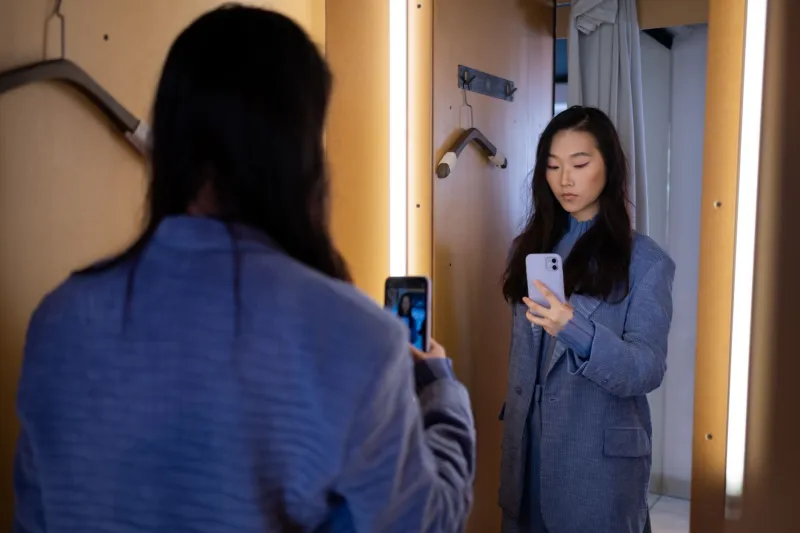
There's a specific kind of creator content that's been dominating feeds for the past few years. You know the type. Grainy phone camera. Unflattering lighting. A caption that says something like just being real with you guys before launching into a confession that feels equal parts vulnerable and strategically timed. The aesthetic is dishevelment. The brand is honesty. And somehow, despite the deliberately rough edges, every single post lands with the same polished consistency.
This isn't a callout. It's an observation—and honestly, it applies to all of us.
The authenticity economy is booming, and it's selling us a myth: that there's a version of ourselves we can put online that exists outside of curation. That if we just strip away the ring light and post the real stuff, we've finally escaped the performance. But here's what nobody wants to say out loud—choosing to be unpolished is still a choice. And choices, by definition, are edits.
The Illusion of the Unedited Self
Let's get into the mechanics of it for a second. When a creator decides to go "raw," what does that actually look like? They pick up their phone instead of their camera. They skip the color grade. They post the take where they stumble over a word. They share the studio when it's a disaster zone instead of after the Sunday reset.
Every single one of those decisions is a curation call.
The stumble got posted because it humanized them. The messy studio made it into the feed because it signaled that real work happens there. The grainy footage reads as intimacy, not laziness—because they've watched enough content to know the difference, and so have you. None of this is cynical. It's just how human communication works. We are always, always selecting what to show.
The psychologist Erving Goffman called this "impression management" back in 1959, and while he wasn't thinking about Instagram Stories, his framework holds up embarrassingly well. We perform different versions of ourselves in different contexts. The version you are with your closest friends is real. The version you are in a job interview is also real. They're both curated for the audience in front of you. Online is no different—it's just that the audience is bigger and the archive is permanent.
The Psychological Weight of Believing Your Own PR
Here's where it gets genuinely tricky. When creators commit hard to the authenticity brand, they sometimes start to believe it completely. They've convinced their audience they're unfiltered, and somewhere along the way, they've convinced themselves too. And that's when things get psychologically complicated.
Because if you believe you're being fully real, then any criticism of your online presence starts to feel like a criticism of your actual self. Not your work. You. The feedback loop tightens. Negative comments hit different when you've staked your identity on the idea that what you're sharing isn't a constructed thing—it's just you, unmediated and honest.
Worse, it becomes harder to evolve. If your brand is authenticity and your authentic self has been performing the same kind of vulnerability for three years, what happens when you grow? When the things you used to share freely start to feel private again? When the "real you" that got 50K followers isn't quite who you are anymore?
Creators get stuck here constantly. They built an audience on a version of themselves that felt true at the time, and now they're trapped maintaining it because changing feels like betrayal—of their audience, but also of the story they told about themselves.
Curation Isn't the Enemy
The reframe that actually helps isn't "stop pretending to be authentic." It's make peace with the fact that curation is inherent to creative output. Full stop. No exceptions.
Every artist, writer, filmmaker, musician, or visual creator is making constant selection decisions. What to include. What to cut. What angle to shoot from. What to say and what to leave unsaid. That's not inauthenticity—that's craft. The problem only arrives when we pretend those decisions aren't happening.
Think about the photographers you respect most. Their work feels true, right? Emotionally honest, specific, real. But they're also the people who took 400 shots and showed you twelve. The truth they're communicating is genuine, but the presentation of that truth is deeply considered. Those two things can coexist. In fact, they have to.
The same applies to how you present yourself and your work online. You can be genuinely honest about your struggles, your process, your failures, your weird obsessions—and still be thoughtful about how you frame those things. Honesty and curation are not opposites. They're collaborators.
What It Looks Like to Actually Own It
So what does a healthier relationship with your online persona actually look like in practice?
It starts with dropping the pretense that you're not making choices. You are. Own that. When you post the behind-the-scenes chaos, you chose to post it. When you share the rejection email, you decided that was the story to tell today. That doesn't make it less true. It just makes it yours in a more honest way.
It also means giving yourself permission to have an aesthetic—even around vulnerability. There's nothing wrong with the fact that your "real" moments have a consistent visual language, or that your candid posts tend to go up at a certain time of day, or that the confessions you share are the ones that are safe enough to share publicly. You're allowed to have boundaries. You're allowed to craft an experience. That's not selling out. That's being a creator.
And maybe most importantly, it means releasing the idea that your audience is owed an unmediated version of you. They're owed good work. They're owed honesty in the things you do choose to share. They're not owed access to the parts of yourself you're still figuring out, or the grief that's too fresh, or the opinions you haven't fully formed yet.
The Freedom in Admitting You're Always Performing Something
There's actually something deeply liberating about accepting that all creative output—including the personal stuff, including the "authentic" stuff—is a performance of a kind. Not in the fake sense. In the intentional sense.
When you stop pretending you've escaped curation, you get to be more deliberate about what you're curating. You get to ask: what story am I actually trying to tell here? What do I genuinely want people to understand about my work, my perspective, my world? And then you get to make those choices clearly, without the cognitive dissonance of believing you're doing something other than what you're doing.
The most compelling creators online aren't the ones performing the most convincing version of no-performance. They're the ones who've gotten clear on what they actually want to communicate—and then communicate it with enough skill and specificity that it lands as true.
Because that's what truth feels like in creative work. Not unfiltered. Not unedited. Just precise enough to hit.
And yeah, that takes craft. Which means it's always, on some level, a choice.